
The final declaration — sometimes called crystallisation — is the once-a-year step that replaces the old Self Assessment return. It tells HMRC that everything you have reported for the year is complete and correct, and it fixes your tax bill for that year. Open Final Submission.
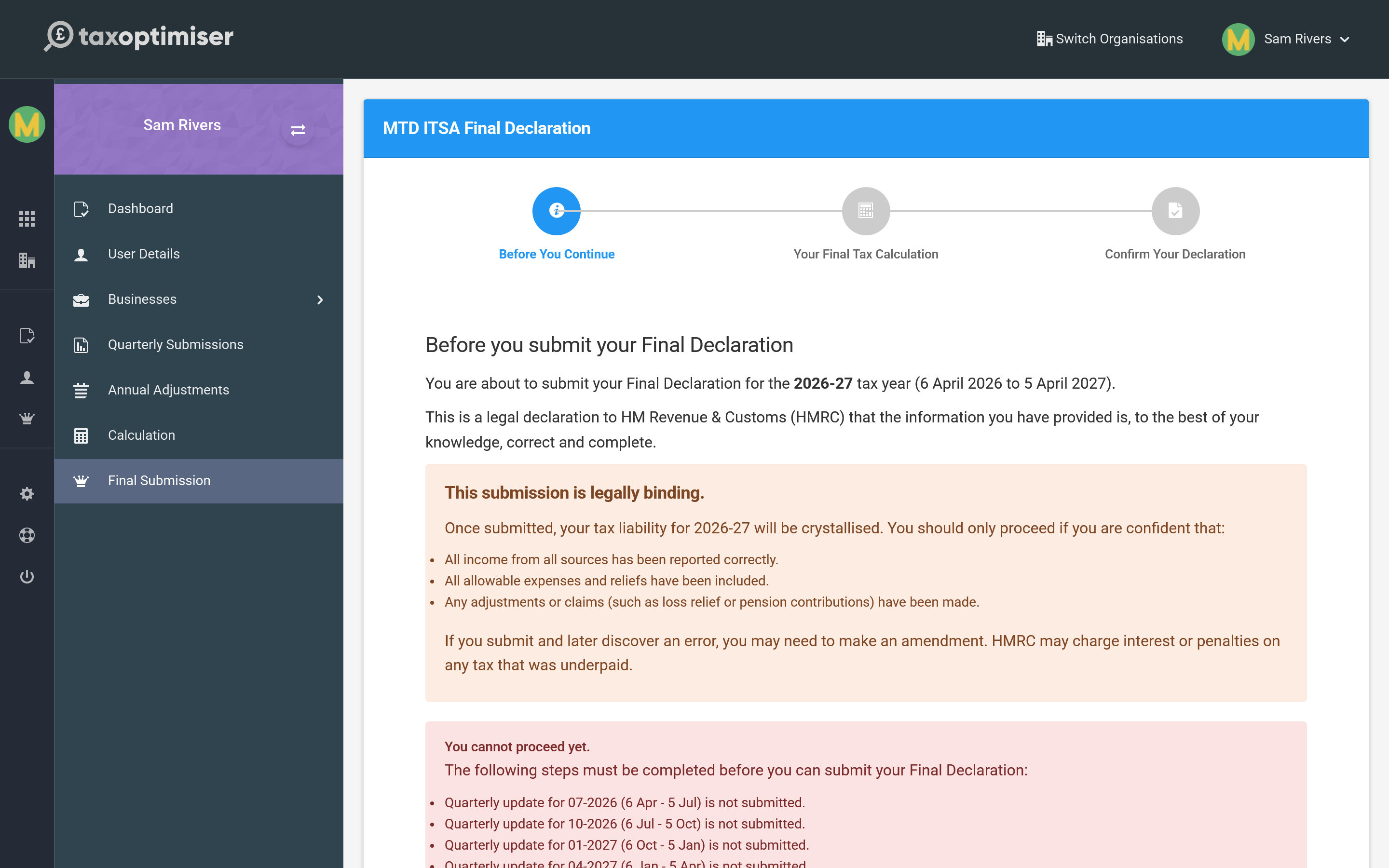
Before you can submit
The declaration covers all your income, so you can only make it once the year is complete: every quarterly update submitted, and any annual adjustments entered. If something is still outstanding, the wizard lists exactly what — finish those first and come back.
The three steps
- Before you continue — a checklist of what the declaration includes, and a reminder that it is legally binding.
- Your final tax calculation — the figure HMRC will crystallise, for you to review one last time.
- Confirm your declaration — you confirm the information is correct and complete, and submit.
The final declaration is a legal statement to HMRC. Once submitted, your tax liability for the year is crystallised. Only proceed when you are confident every source of income, expense and relief has been reported — if you find an error later you may need to make an amendment, and HMRC can charge interest on any tax that was underpaid.
Managing tax years
Each tax year is Open while you are still reporting, and becomes Closed once you submit the final declaration. If you later discover a change is needed, you can re-open the year for amendment — this lets you adjust the figures and re-finalise. A re-opened year is marked as amended so the change is clear.
That completes the journey — back to Getting started with MTD ITSA.