
The Trusts (SA107) page covers income from trusts and settlements (including settlor-interested trusts) and from the estates of people who have died. The golden rule is on the page itself: enter the figures net, exactly as the R185 shows them — the calculation grosses each box up at the rate the trustees or personal representatives accounted for (basic, savings, dividend or trust rate) and credits the tax automatically.
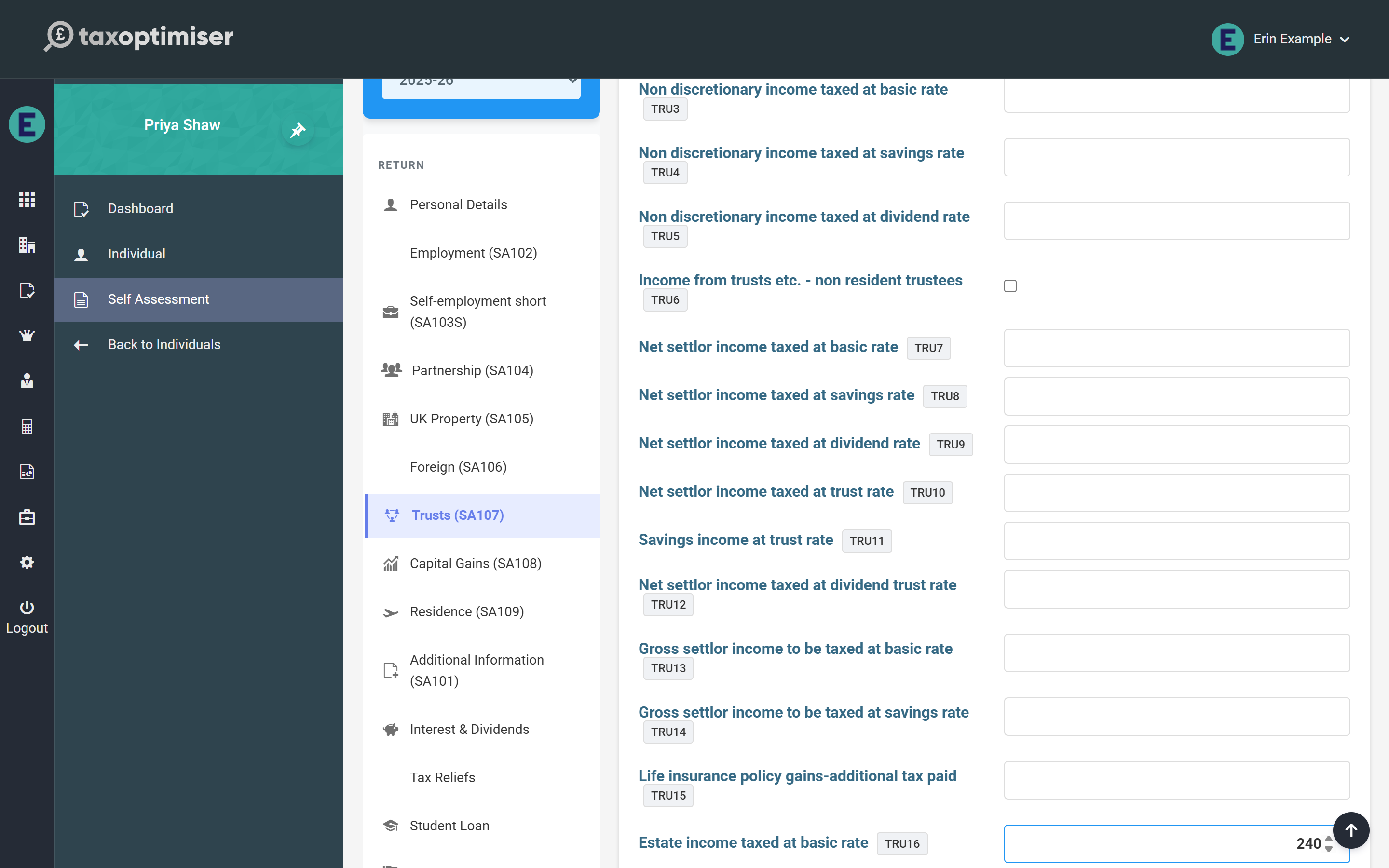
Income from trusts
Discretionary income from the R185 (Trust Income) goes in box 1 and is grossed up at the 45% trust rate. Boxes 3 to 5 take the net amounts of non-discretionary income by type; boxes 7 to 12 the settlor’s income from the R185 (Settlor), with boxes 13 and 14 for the tax. The hints under each group repeat which R185 the figures come from.

Two credits are non-repayable
Payments from settlor-interested trusts (box 2) and estate income taxed at the non-repayable basic rate (box 19) carry credits that can never create a refund. HMRC’s own calculation lets each of them cover only the tax on that income: it never reduces the tax on the client’s other income, and the unused part is simply lost. Box 2 is also taken into income exactly as keyed, without being grossed up; box 19 is grossed up at the basic rate. The statement shows the credit it has used on its own line, and the calculation adds a note explaining the cap. This treatment was confirmed against HMRC’s test service.
Other boxes to know
- Box 15 (life-insurance gains on a trust policy) is treated by HMRC as tax paid and repaid in full, not as a gain. The calculation does the same and flags it, so check the figure belongs there.
- Box 24 (foreign tax on estate income for which FTCR is not claimed) is deducted from the estate income, and the calculation warns if it exceeds that income.
- A non-resident client’s trust dividends join their UK dividends for the non-repayable dividend credit; see Residence.
Next: Capital gains (SA108).
